


Papias of Hieropolis is more than just an amazing name for your next child; he may be one of the most important players in early Christian history that you have (probably) never heard of. It is through him that what little we know about the author of the “main” gospel, Mark, comes to us today.
Papias was born sometime around 60 C.E., almost thirty years after the crucifixion of Jesus. As such, no one knows very much about the upbringing and/ or the non-liturgical life of Papi (I’m sure he made his friends call him “Papi”…..) It was an exciting time to be sure. The gospels were starting to be written during his formative years and it seems as though he may have been among those who were doing the writing.
When Papias converted (however and whenever he did so is a mystery), the memory of Jesus was so fresh that it was still possible to speak with those who actually saw him. His bishopric in Hieropolis (today in Türkiye……formerly known as Turkey) placed him in a location vital to the infant church as it was founded by Paul himself during his time in Ephesus. In fact, Philip is traditionally said to have achieved martyrdom in Hieropolis in CE 80, a fact which would’ve clearly had an influence on Papi when he started his written works in around CE 95. In addition to his liturgical duties he became a voracious consumer of oral testimony of the witnesses to the ministry of Jesus. He writes of this in his Magnum Opus preserved in this excerpt taken from Eusebius:
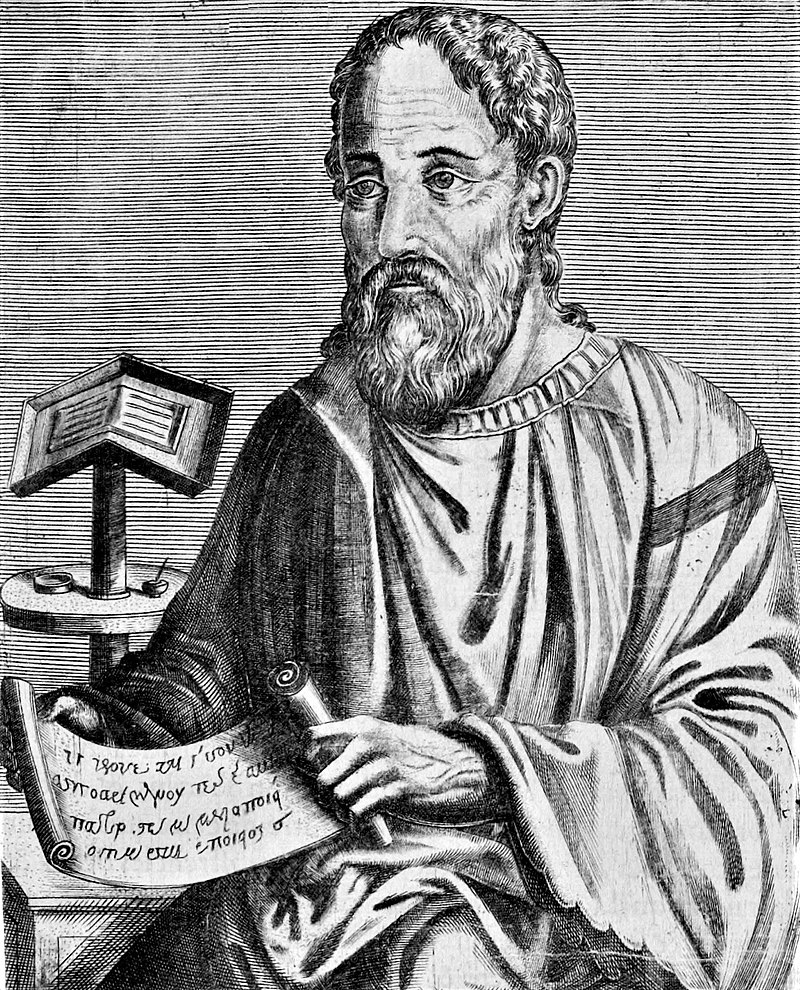
I shall not hesitate also to put into ordered form for you, along with the interpretations, everything I learned carefully in the past from the elders and noted down carefully, for the truth of which I vouch. For unlike most people I took no pleasure in those who told many different stories, but only in those who taught the truth. Nor did I take pleasure in those who reported their memory of someone else’s commandments, but only in those who reported their memory of the commandments given by the Lord to the faith and proceeding from the Truth itself. And if by chance anyone who had been in attendance on the elders arrived, I made enquiries about the words of the elders—what Andrew or Peter had said, or Philip or Thomas or James or John or Matthew or any other of the Lord’s disciples, and whatever Aristion and John the Elder, the Lord’s disciples, were saying. For I did not think that information from the books would profit me as much as information from a living and surviving voice. – Historia Ecclesiastica, Eusebius. 3. 39. (Click Citation to read source text)
This appetite for collection oral testimony found its way also into Iraneus’ description of Papias as being “a hearer of John.” This seems funny to us as most of us have met or heard famous people or politicians speak but it was not so common at the time. If you weren’t in the epicenters of second century culture, you would not have had nearly as many opportunities. If you were learned enough to have received information from John you must really be something. There may be something to this that we need to revive. “I am Tmaxx, hearer of Bill and Hillary Clinton, Donald Trump, George W Bush, Al Gore” and so forth. (This is actually true. You won’t be able to ferret out my political leanings from this partial list though. I am a also a “respecter of the office” and go see every candidate and former president that I can. I live in a military town of a swing state so we see a lot of these types!)
So, John was heard….but for our historical purposes, this was not his most important* contact. That honor goes to John Mark / Mark, companion/ translator / “hearer” of Peter and later companion of Paul and author of the gospel of Mark. (*important based upon the gravity of what we know about his writings today that is.) Papi fanboy Eusebius of Caesarea when writing about him in Historia Ecclesiastica, used several exceprts of Papi’s book concerning the role of John Mark in the creation of the gospel. In the following excerpt, we see what makes Mark such an important contact.
“This also the presbyter said: Mark, having become the interpreter of Peter, wrote down accurately, though not in order, whatsoever he remembered of the things said or done by Christ. For he neither heard the Lord nor followed him, but afterward, as I said, he followed Peter, who adapted his teaching to the needs of his hearers, but with no intention of giving a connected account of the Lord’s discourses, so that Mark committed no error while he thus wrote some things as he remembered them. For he was careful of one thing, not to omit any of the things which he had heard, and not to state any of them falsely.” These things are related by Papias concerning Mark. –Historia Ecclesiastica, Eusebius.
That sinlge paragraph pretty much represents the entirety of our sources on the writing of Mark (the gospel upon which all the others rely) as well as the near totality of our knowledge. To sum up, Papias grilled Mark as to his story. Mark tells him that He was asked later (presumably by Paul) to record what he remembered Peter saying during his pissionary voyages. Mark did so without paying too much attention to the order in which the stories were recorded.
Wow. That is one profound and weighty paragraph. That small group of sentences from the ancient world has given fuel to arguments ever since. In it, there is the answer as to why Mark doesn’t mention the defining traits of the Jesus of Christianity; the virgin birth and the ressurection…….. Peter did not include those events in his gospel. Isn’t that odd? Two of the biggest things that separate Jesus of Nazareth from the other dozen Messiahs of the day didnt find their way into Peter’s preaching? Actually, no. It isnt.
The proto-church was very fragmented. For our purposes, we will look at the Jerusalem Church / The “Nazarenes and Paul’s group. The Jerusalem church was made of the original followers of Jesus during his time with a pulse. (Historically speaking, that is.) He had Twelve prinicpal disciples who were each going to be charged with going to one of the twelve tribes of Judaism to bring the good news and be its leader in the kingdom to come. Very Jewish……just like their Messiah. They did believe that Jesus rose but not physically. Many of their core beliefs may be found in the Didache. The Eucharist had nothing to do with flesh and blood etc. PAUL was the one obssessed with “the blood.”

Paul’s group was most definitely geared towards a hellenized / roman crowd. Not a huge surprise given Paul’s place in life. We find so many Platonic (from Plato) / Hellenistic themes being applied to Jesus of Nazareth and his movement that many old roman tales may be mistaken for being Christian. Many changes were made to the Judaism that Jesus preached in order to include the gentiles. (Remember, Jesus wasnt a bit concerned about reaching Gentiles until the Jewish tribes were healed / united.) It is during this process that the religion we now know as Christianity started to form. Paul emphasized Jesus’ death and resurrection as being a trump card against death and sin and acknowledging this was vital to one’s salvation. Paul sought to show that Jesus was the son of God.
Knowing this, is it still odd that Peter wouldn’t have mentioned a virgin birth or a resurrection in his evangelism? No. It is not. Peter was not only one of the twelve, an OG, he was Jesus’ rock. He had a passion, a calling to spread the story of his truly beloved messiah and was doing so honestly. Peter was clearly not aware of any such happenings nor would he have been expecting them.
That is not to say that Paul’s fingerprints arent also all over the gospel of Mark. They indeed are. By the time Mark was written, the letters of Paul had been widely read and distributed as well as “Paul’s Gospel’ and found their way even into Mark. The other gospels however, contain far more Paul. What does Papias say about the other gospels?
“So then Matthew wrote the oracles in the Hebrew language, and every one interpreted them as he was able.”
That’s it. Odd as it says that Matthew was initially written in Hebrew but otherwise that’s it.
Although Eusebius records that Papias wrote five books, Expositions of Oracles of the Lord, nothing exists today apart from excerpts included in the writings of later scolars. It is possible that they were loved to death or even just lost but I suspect that they met the same end as any other gospel or document that did not agree with the orthodoxy of the day; they were transformed into greenhouse gasses and heat by a rapid oxidation reaction in one of the bigger tragedies of early Christian studies.

Papi also finds himself even more central to the story of the New Testament. In a theory called “Q+ /Papias” (Q+/PapH) by Dennis MacDonald, material from Papias’ works join the equally elusive “Q” as secondary / tertiary sources for material found in Luke. (We may visit this theory one day in its own post.) His solution to the synoptic problem would see the gospels written in the following order: Logoi / Q, Mark, Matthew, Papias, Luke. It is clear to all reading the gospels in order that they are being added to and shaped with each version. Is this the solution? Who knows……..we, maybe Papi does.
In closing, Papias is a very important figure in not only Church history but the history of the western world in general. He offers us some tiny nuggets of insight into the most important writings ever to have been put to papyrus (or paper….or disc for that matter.) If Dr. Macdonald is correct, he may have done even more than that. Papias will undoubtedly come up often as we explore more of early / proto-Christianity in our search for the historical Jesus. Stay tuned……er logged in!

 The Incredible Jesus
Leave a reply to The Lost Gospel: Q – The Incredible Jesus Cancel reply