

“Woe to you, teachers of the law and Pharisees, you hypocrites!”
-Matthew 23:13
When seeking more knowledge about the man that is their Messiah, Christians often focus on the last few years of his time on earth. While not specifically mentioned in the Bible, we can find clues about who the man was by examining his working life; in that time from the age that he was able to carry tools to assist his father until he departed to start his ministry; maybe from 8 to 33 years old. As it turns out, we happen to know where he toiled most every day during his first career and how it left a large impression on him.
Most of us know that Jesus of Nazareth was a tradesman. He was described by all sources as a “τέκτων” (Tekton). While most of us have been told that is a carpenter, it is more fitting to a “builder” or “contractor”. Given his geographical situation there in the Galilee, the “building” was mainly done with stone, brick or anything other than wood as the types of trees needed for building would have to come from out of the area and would not have been very cost effective. Therefore Jesus was probably better described as a “mason.” This would explain his love of building / foundation analogies in his teachings. (Matthew 7:24-27, Matthew 21:42, Luke 6:47-49)
Prior to the genesis of his ministry, Joseph, Maria and progeny lived in Nazareth, a tiny settlement in the Galilee with only a few hundred residents. As anyone from a small town knows, there are not many jobs around a community that small as demand for services is easily met by a single individual. The idea of travelling / commuting for work in the first century was different as well given that they would be travelling on foot and were thus limited to however far they could reliably travel in just a few hours. Given these facts, it would have been almost impossible for Joseph and Sons to have made a living for themselves. So how did they do it? Enter the vain ambition of Herod Antipas.
Just four miles away from Nazareth lies the town of Sephorris; the administrative center of the Galilee. In the years prior to Jesus’ birth, the Roman governor of Syria Varus had destroyed it following a rebellion. According to Flavius Josephus he burnt it to the ground. Right as Jesus was being born (more than likely in Nazareth btw) Herod Antipas saw his opportunity to ingratiate himself further to the emperor by rebuilding the city in a manner to entice the splendour and power of Rome. He wanted it to be the “Ornament of the Galilee.” (He had a habit of building and dedicating entire cities to Rome and her Emperor in order to further his dream of being anointed the king of the Jews…not just Galilee. See Caesarea.)
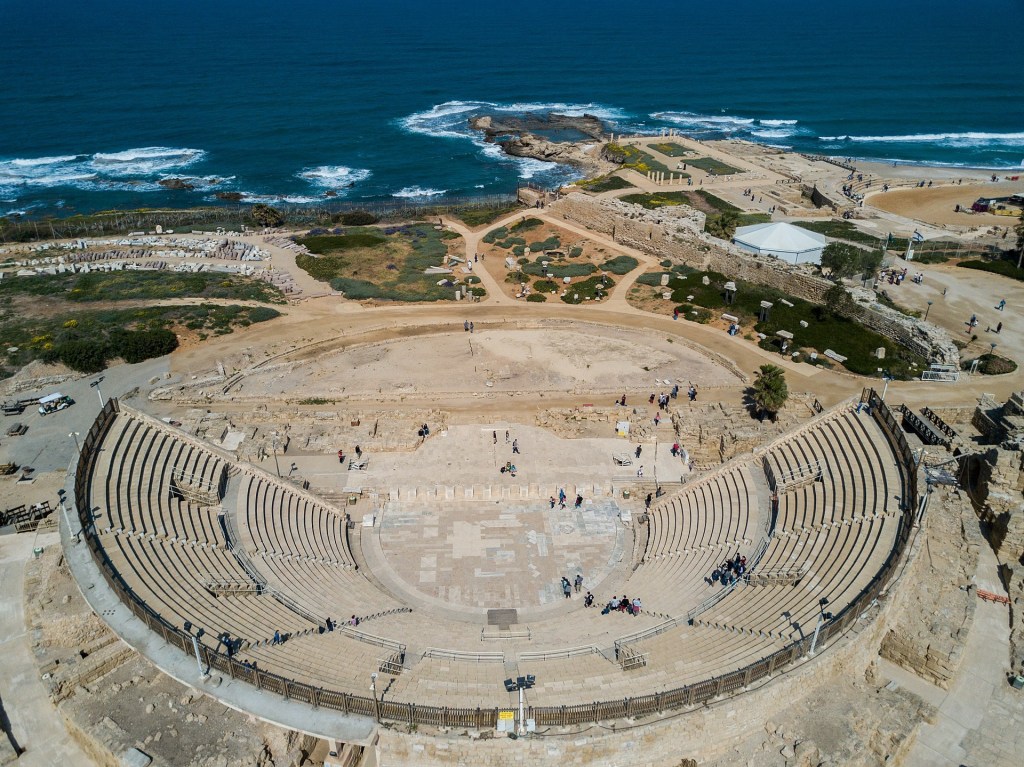
The construction was finally hitting its fever pace right about the time that Joseph would have started taking young Jesus with him to work. Joseph was an obedient Jew and would have followed the Law requiring him to teach his sons his trade. This was a blessing to the family to have so much steady work so close to home. I think it is reasonable to think that he continued his part of building the city up until the birth of his ministry.
Eventually, the city grew into the cosmopolitan cultural administrative center that Herod Antipas had envisioned. With the Romans came all of the trappings and amenities enjoyed by Roman society. To a young Jew such as Jesus, seeing this foreign culture of the occupiers must have been quite the culture shock. In Nazareth and most of the region, contact with the occupying society was at a minimum as compared to the major population centers. Jesus and his family found themselves surrounded by and dependent on this culture six days a week for years.
Joseph, the adopted father of Jesus probably died early on. He was known to be much older than his wife and stops being mentioned in the gospels almost immediately. Under Jewish law, Mary may have then married Joseph’s brother Clofus though he was also old at that point. (See “There’s Something About Mary, Mary and Mary” on this site for a brief overview of this topic). Eventually, Jesus was the head of the household and thus in charge of the family business.
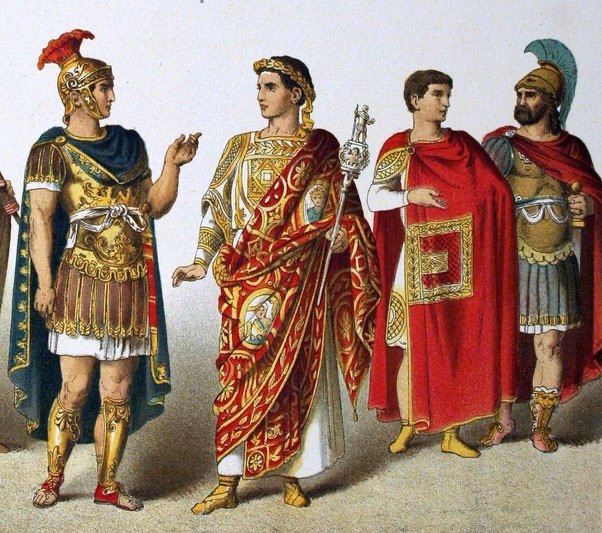
The Lingua Franca of Sepphoris was Greek as it was in all of Hellenized society. In running the family business, Jesus would have been contracted by and needed to negotiate with Roman patrons in the language of their realm. Thus it is believed that Jesus would have spoken at least some Greek; at least enough to be able to conduct business properly. He would’ve also been exposed to all of the things that the Romans would get up to during their down times. Brothels, Vomitaria and of course the Theatre all would’ve been familiar to him as he spent a large amount of his time right in the very center of it.
This fact is what brings us to the title of this post. In Matthew 23:13, he calls the Pharisees hypocrites. This was not a word that they translated out of his native Aramaic but a word he had absorbed from being around the Greek theatre. ὑποκριτής (ipokritis) is the Greek word / description for an actor in the theatre. The use of “actor” was not one that was used in this situation in Aramaic and thus would not have been translated into Greek as such. Thus we know that he applied this term himself in Greek.
It seems quite obvious that Jesus was not a fan of what Sepphoris had to offer the world. While it did serve as the “shining city on a hill” for one of his analogies, the visibility from afar seems to be the best thing that he witnessed during his time there. Given that so many of his teachings were against much of what he had seen there, we could say that Sepphoris is responsible for the teachings that serve as the backbone of the most impactful religion in all of history!
Excavations continue uncovering ancient Sepphoris. There are very few places still available where a person could stand where Jesus once stood or touch something that he touched. Jesus spend years working / building Sepphoris thus it is certain that some of the stones, foundations, buildings being uncovered now were placed there by the hand of Jesus himself. While we will never know which stones they are, just being on the soil that contains his blood, sweat and tears and knowing that the eye has directly fallen on some of his actual handiwork would be probably the most inspiring feeling ever. Be sure to add it to the list on your next pilgrimage.
 The Incredible Jesus
Leave a comment