-
The Lost Gospel: Q
First of all, No. This has nothing to do with the conspiracy theory bearing the same letter as a name. During studies of Christian origins, one is very quickly guaranteed to run into the term Q-source quite often when discussing the synoptic gospels. Q stands for “Quelle”, the German word for “source.” It is a very scholarly concept that has evolved after meticulous study of the oldest manuscripts and sources that are known to us as a theory as to how the synoptic Gospels are so……..synoptic.
Contrary to popular belief, the Gospels weren’t all written by disciples at the same time as the events occurred. They were actually written by separate people at separate times. The gospels were written after the widely circulated letters of Paul and one can see his influence all over them. The earliest gospel, Mark, was written some thirty to forty-five years after the death of Jesus and the final synoptic gospel, Luke / Acts was written between sixty and seventy years after the crucifixion. (Still later was John thought to be no earlier than 95 CE but not ever included in these sorts of studies.)
(more…) -
“Hypocrite”- What One Single Word Tells Us About Jesus’ Working Years.
“Woe to you, teachers of the law and Pharisees, you hypocrites!”
-Matthew 23:13
When seeking more knowledge about the man that is their Messiah, Christians often focus on the last few years of his time on earth. While not specifically mentioned in the Bible, we can find clues about who the man was by examining his working life; in that time from the age that he was able to carry tools to assist his father until he departed to start his ministry; maybe from 8 to 33 years old. As it turns out, we happen to know where he toiled most every day during his first career and how it left a large impression on him.
Most of us know that Jesus of Nazareth was a tradesman. He was described by all sources as a “τέκτων” (Tekton). While most of us have been told that is a carpenter, it is more fitting to a “builder” or “contractor”. Given his geographical situation there in the Galilee, the “building” was mainly done with stone, brick or anything other than wood as the types of trees needed for building would have to come from out of the area and would not have been very cost effective. Therefore Jesus was probably better described as a “mason.” This would explain his love of building / foundation analogies in his teachings. (Matthew 7:24-27, Matthew 21:42, Luke 6:47-49)
Prior to the genesis of his ministry, Joseph, Maria and progeny lived in Nazareth, a tiny settlement in the Galilee with only a few hundred residents. As anyone from a small town knows, there are not many jobs around a community that small as demand for services is easily met by a single individual. The idea of travelling / commuting for work in the first century was different as well given that they would be travelling on foot and were thus limited to however far they could reliably travel in just a few hours. Given these facts, it would have been almost impossible for Joseph and Sons to have made a living for themselves. So how did they do it? Enter the vain ambition of Herod Antipas.
(more…) -
The Evolution of Modern Christian Eschatology (The ever changing end of the world.)
With all the terrible events transpiring in Europe and Israel, Christians (mainly evangelicals) are in full-blown rapture mode. Dozens of YouTube channels about end-times prophecy pop up every day with all of their episodes carrying a call to salvation. These are certainly scary times; no doubt about it. We teeter closer than we ever have been to a total nuclear apocalypse and Israel faces enemies far more advanced than it ever has prior. We must remember though that all this rapture / Armageddon talk is based on a few books contained in the Jewish Bible and the Christian New Testament that are horribly misunderstood. In this post, we will look at two of the oft-cited apocalypse prophecies and what they actually meant to the original audience; something entirely different than they mean now.
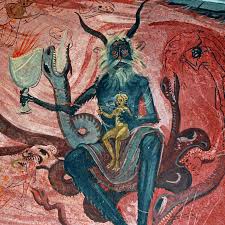
The AntiChrist; one of the main protagonists of the Biblical end-time prophecies. Eschatology is the study of the “end of the world” as it applies to the fate of human-kind. Some of the most famous books in the Bible are eschatological in nature. In each case of eschatological books in the Bible and New-testament we must remember that the author was absolutely not writing with readers in the distant future in mind. They were written for their fellow believers in their own time during periods of great concern. They all contain symbolism and images that were readily understood by the reader as representative of the world around them. I would imagine it would be like today mentioning that a man “rolls in his Bugatti.” We know this man must certainly be rich based on being familiar with the status afforded to that brand of car and the sorts of people who often buy them. 2000 from now all the contextual nuance will certainly be lost. I shudder to think what the future readers will think that means!
A great example of this is found in Daniel 7. We know that Daniel 7 is not written about some event in the future but happenings that had already occurred in the author’s past. The author (the anonymous writer using the character of Daniel) was writing some 600 years after the events he chronicled. The is a very common occurrence in this period in history. The book describes the conquering of the Jewish people by four “beasts.” Spoiler Alert: each of the beasts were the various nations who conquered the Jews and the little horn is Antiochus Epiphaneus!
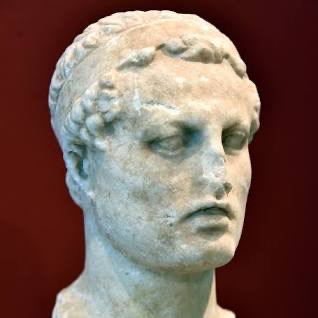
Antiochus Epiphanes aka Big Tike. “Evangelical Christians in the 19th century came up with the idea of a “rapture”- that Jesus was soon to return to earth to take true believers out of it before the “tribulation” began.” -Dr. Bart Ehrman (Ehrmanblog.org)
The modern form of Christian Eschatology has not always been a feature of Christianity. Modern Christians often believe that their beliefs have been handed down to them largely unchanged from the time of the apostles but that is far from true. This fact impacts many aspects of all religions but Christian eschatology takes a hard hit. The belief of the rapture and the millenium etc is a relatively modern interpretation. It has popped up a few times in small areas prior throughout history but more Christians have died without it than have lived with it. It starts showing up as a popular interpretation in the 19th century and was wildly popular with American Protestants….as it still is.
It would come as a surprise to many modern Christians that the rapture is not a biblical concept. It is based on 1 Thessalonians 4:15-17
According to the Lord’s word, we tell you that we who are still alive, who are left until the coming of the Lord, will certainly not precede those who have fallen asleep. For the Lord himself will come down from heaven, with a loud command, with the voice of the archangel and with the trumpet call of God, and the dead in Christ will rise first. After that, we who are still alive and are left will be caught up together with them in the clouds to meet the Lord in the air. And so we will be with the Lord forever. 1 Thessalonians 4:15-17
One can be forgiven for believing that this is a description of believers floating up to greet their savior but alas, tis not to be. It is basically an answer to the question posed to Paul by the church in Thessalonica about the fate of those who have already passed prior to the second coming; believed to be happening for them at any moment. Paul employs themes / images from Daniel 7 as well as the contemporary use of the concept of “air” to deliver his answer. They would be raised from the dead to welcome the messiah back to the earth…..not away from it.
Kurt Willems gives an excellent explanation of this HERE
It is very similar situation in the New Testament as in the book of Revelations. Renown Scholar Dr. Bart Ehrman in his book Armageddon; What the Bible Really Says About the End highlights many reasons that the book of Revelations should not be taken in the weighty prophetic way that many do. He notes that the book of Revelations itself was only (eventually) included in the Biblical Canon because of a misunderstanding during a theological argument about Arianism had at the time of the Council of Nicaea. Protestant hero and namesake of modern Lutherans ;Martin Luther, believed so strongly in Revelations being non-inspired that he left it completely out of the Bibles he used placing it in an appendix.

Protestant numero uno Martin Luther believed the book of Revelations was such crap that he removed it from the Bibles in his use. In closing, it is tempting to believe that the entirety of the Christian Bible and the religion in general were all written at / for our current age and generation and many of the current happenings may well seem to resemble what one sees recorded. It is extremely important that followers of the Christian faiths realise that the apocalyptic prophesies that motivate their beliefs have only been a part of the religion for less than the last 10 percent of its history. The closer we get in time to Jesus and the original writers of these prophecies, the more they are understood to be about the world around them during their own time. The 12 disciples certainly would not have known what the rapture was nor would the author of Revelation think that Putin is “Gog.” The end of the world may well be unfolding in front of us but is doing so at the hands of selfish idiots rather than divine prophecy. I am not sure if that is better or not.
-
Political Intrigue and the Crucifixion; First-Century Watergate. Part Two: Changing Money.
The scene of Jesus overturning the tables of the Temple money-changers is one of the most iconic of the New Testament. While his righteous wrath at the desecration of the Temple seems to be in line with what we know about Jesus, just about everything else in the story seems very odd. In this entry, we will take a closer critical look in order to understand what really may have occurred.
The Chief Priest of the Temple as well as his colleague temple-priests are portrayed as villains in the gospels. Known as the Saducees, they are shown to be corrupt abusers of power ; using the access to the temple to extort the faithful. The second largest of the sects of Judaism at the time, they were primarily composed of the so-called “1 %”; the elite of Jewish society. Rome allowed them to remain in control of the Temple and as such were the means to retaining their power. Thus they had a vested interest in keeping the Romans happy through exerting priestly control over the general populace. The region had long been a hotbed of political upheaval and strife so they used power of the house of God to keep order and maintain the status quo. Saducees also made up a very large part of the Sanhedrin; similar to a Supreme Court for the Jewish Nation. They did not tolerate dissent well and were known to be harsh in their treatment of the masses. Why then did all of the nation insist on pilgrimage to this quite corrupt location rather than celebrating the Passover at home?

Shekel. 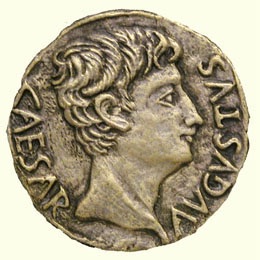
Denarius Jewish Law required sacrifices be made at the temple at various points during a follower’s life. There were sacrificial offerings meant to cleanse one from what the catholics would call “original” sin, offerings of thanksgiving for various events, sacrifices for healing. There were also ritual sacrifices to mark holidays. Priests at the temple were offering sacrifices twice daily on behalf of the community. Sacrifice was a key point in the spiritual life of the first century Jew being 100 of the 613 commandments in the Torah with a further 50 concerning the priests actions during sacrifices.. Passover was one of the key times for offering sacrifice at the Temple.
Given the importance of sacrifice to the temple, the obtaining of the proper coinage was also of great importance. Despite the common belief often taught in Sunday School, only Roman coinage was accepted. Roman coins were of known purity and reliable weight; the same couldn’t be said for the dozens of other coins coming from all ends of the known world. For this purpose, there were money exchangers permitted to operate in the periphery. These were not alitruistic temple servants; they were there to make a profit. Unlike today, there was not an international market from which to refer when it comes to currency. Today in Jerusalem, one can visit a money changer and compare their rates to what the currency value on the world market and make an informed decision as to utilizing their services. The exchangers of the temple would set their own rates often colluding with eachother in an early example of “price-fixing” in order to fleece the pilgrims who had no choice but to accept. I would imagine it would be like if the Catholic church of today requiring the Eucharist for salvation and allowing the wine and bread to be sold by a third party in the foyer for an insane amount. Not a perfect example but it will do..
Of course, nothing happens in the temple without the knowledge and consent of the Saduccees; the stewards of the temple. A cut of the profits would be handed up to the high priest as well as the other Saduccees, giving them a nice income stream. Passover represented a windfall for everyone involved in temple business as it was the peak time for pilgrimage with daily incomes rising exponentially during the festival. Because of this, there were no shenanigans tolerated; extra temple-guards would be posted everywhere. There would have also been extra Roman guards as well to keep an eye on things lest any unrest develop into a flashpoint or rebellion. Both had a vested interested in the status quo and smooth operation with quick removal of any hooligans who would seek to disrupt the commerce of the temple.
The situation is (sadly) not to dissimilar to that which exists today on the exact same site; Temple Mount. It is an extremely important site to both of the religious groups as well as the civil governments of the region and as such, is heavily guarded by all interested parties with overwatch done by the major military party of the area; The State of Israel/. The tensions between the Arab population and Israelis is so tense that even the smallest offense could quickly spiral into a all out riot or battle, To prevent this at all costs, the authorities do not permit even the smallest offense to occur that may have even the smallest chance of escalating. Now, combine vast amounts of income being made by the administrators of the site to such a tense situation and one begins to get the idea of what the climate was like for Jesus’ upcoming encounters with the money-changers. (Note: only the tensions and intolerance for shenanigans are similar. The political situation is VERY different.)
Mark details Jesus’ last visit to the temple:
“On reaching Jerusalem, Jesus entered the temple courts and began driving out those who were buying and selling there. He overturned the tables of the money changers and the benches of those selling doves, and would not allow anyone to carry merchandise through the temple courts. And as he taught them, he said, “Is it not written: ‘My house will be called a house of prayer for all nations’? But you have made it ‘a den of robbers.’”
-Mark 11:15-17The account in Mark paints a very intense picture. Jesus goes into the center of Jewish government; the center of the Jewish world and shuts down all of the vital commerce. Scholars such as Dr. James Tabor (UNC Charlotte Retired) say that Jesus and company shut down the commerce area for the day.
One could compare it to modern protests in which popular crowded places are shut down / occupied by some manner of protest. At first, many may be tolerant or even supportive until it interferes with their plans. Soon it starts to anger all of the patrons being deprived of the use of the area and the tension rises. One needs only to search YouTube for videos of protestors blocking a busy roadway; at some point, someone emerges and starts dragging people away as they are being prevented from conducting their own business. It would’ve been exactly the same during Jesus’ incident with a couple of differences; 1) he was interrupting a religious necessity which would’ve earned much more scorn than those who were simply made to be late to work and 2) the presence of two species of heavily armed and heavy handed guards (Temple Guards and Roman Soldiers) being well staffed in the area to prevent such an outburst. Given that this was such a sensitive area, Jesus was quickly subdued and arrested, right? Well, no. He was not.
There was an unexpected response from the powerful enforcement authorities as well as the public; they did NOTHING. That’s right, the heavy-handed oppressive security forces of both Rome as well as the Temple guards seemingly looked the other way and permitted it to continue. Of the four accounts of the event described in the gospels, none of them mention any action by the concerned authorities. This poses a very large question; what could have been the reason they allowed this to occur?
The answer may lie in an unexpected direction. Just as today, the authorities at the temple site simply could not allow any disturbance to spiral out of control into a full-fledged riot which could easily lead to a revolutionary behavior. Jesus behaving in such a manner not only hurt their bottom-line, it undermined their authority over the masses as well as their ability to keep order. There must have been a strategic element that stayed their hands. Many have theorized that may have been Herod Antipas and Pontius Pilatus themselves.
Only an order from “the top” could’ve stopped the Temple High Priest and the Soldiers from enforcing order and risking a revolutionary riot. Why would they do this? It would have been done in order to further the aspirations of several powerful men; Herod Antipas, Pontius Pilate and We will explore this theory more in the articles to follow.
-
Political Intrigue and the Crucifixion; First-Century Watergate. Part One: Branches and Hosannahs.
The story of the last week of the life of Jesus of Nazareth is…..off. As the new convert reads of his trip into Jerusalem, they are filled with many questions…..as am I. Several aspects of the story do not make sense. In this series of posts, we will touch on a few of them as well as outline a wild new theory / timeline as presented by many leading historians. Buckle up.
We will start at the first event associated with the Holy Week; Jesus’ entry into the Jerusalem. Jesus had already had a following for at least three years at this point and had avoided Jerusalem for this very purpose; as being a rather “anti-authoritarian” preacher would have drawn a target on his back. (John 7:6-8) Thus upon hearing of his approach, the crowds would have been fairly excited to finally get the chance to see him.
By this point in his movement, he was seen by many to be the Messiah and was conducting himself as such. His followers and he would have all been well aware of Zechariah 9:9 :
(more…)“Exult greatly, O daughter Zion! Shout for joy, O daughter Jerusalem! Behold: your king is coming to you, a just savior is he, Humble, and riding on a donkey, on a colt, the foal of a donkey.”
-Zechariah 9:9 -
Happy 2024!
Happy New Year, Heretics! I am working on no fewer than 7 new awesome posts for our little group here so please bear with me……I hope you all had a great holiday season and look forward to a great year!-
Tmaxx
-
Papias of Hieropolis

Presumed “selfie” by Papias of Hieropolis. That is one hell of a pointer finger. Papias of Hieropolis is more than just an amazing name for your next child; he may be one of the most important players in early Christian history that you have (probably) never heard of. It is through him that what little we know about the author of the “main” gospel, Mark, comes to us today.
Papias was born sometime around 60 C.E., almost thirty years after the crucifixion of Jesus. As such, no one knows very much about the upbringing and/ or the non-liturgical life of Papi (I’m sure he made his friends call him “Papi”…..) It was an exciting time to be sure. The gospels were starting to be written during his formative years and it seems as though he may have been among those who were doing the writing.
(more…) -
Gnosticism; Then and Now
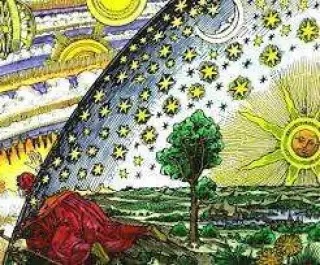
Most of us are aware of the story of Jesus around which the world’s largest religion is shaped. Over the almost two millennia since the death of Jesus of Nazareth, the Christian version of his story has coalesced into the form that most of us are familiar with today. As popular and nearly ubiquitous as it is, it is far from the only one. There are many philosophies that place Jesus as the possessor and teacher of the secret knowledge of the cosmos that exists inside of the each human. While this may be part of many modern mystic belief systems, it is far from a new invention. These sorts of Christian mystic beliefs are nearly as old as the orthodox religion itself.
(more…) -
New Entry Coming Soon!
Please bear with me. I Have several things in the oven for you all!
-
Thecla; the First First-Woman of the Church.
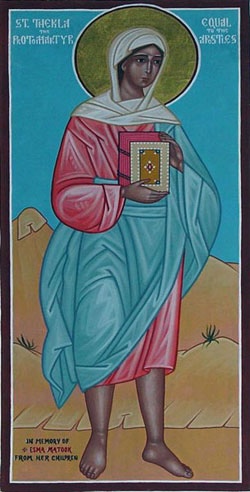
St. Thecla For as long as anyone can remember, Mary the mother of Jesus has held the position of the highest revered woman of the Church. By sheer volume, more prayers are said to her than any other person; including Jesus. In the early Church however, there was another woman who contended for that honor. Thecla.
The story of Thecla is found in the Acts of Paul and Thecla. Although denied entry into the canon at the Council of Nicaea, it was a widely distributed account and was read in the first couple centuries of the Common Era. Before any of my fellow nerds pipe up yes, it is known to have been forged. It is an example of pseudepigrapha ; a work written in the name of another (usually a more well known) author. Regardless of the actual authorship, it is a product of its times and a reflection of the attitudes that were present during this stage of the developement of what we today know as Christianity. It is believed that the author recorded an already known account in the name of Paul the apostle in order to give it the weight he believed it deserved.
(more…)
A WordPress.com site

