
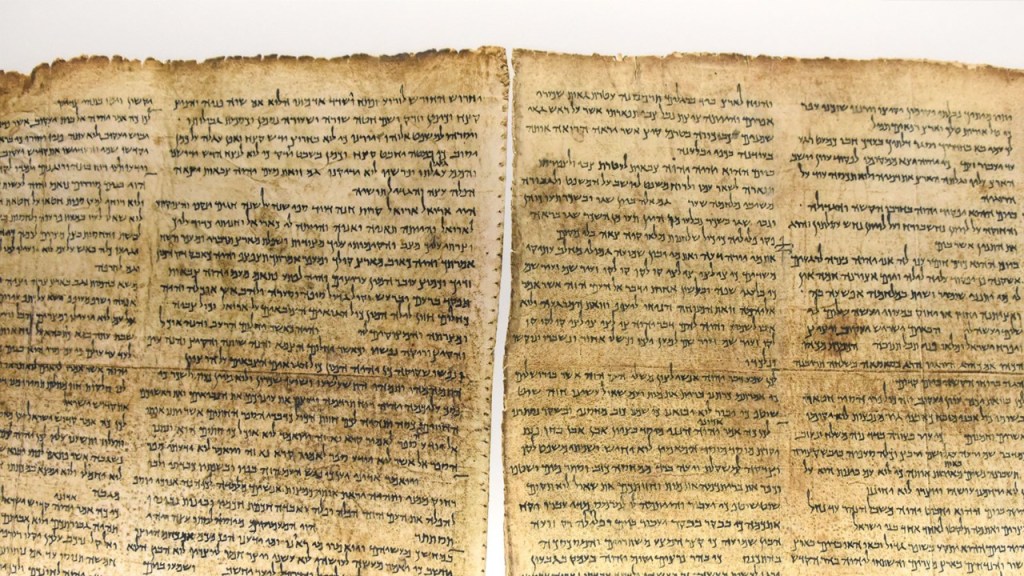
Growing up as an evangelical Christian. my sole resource for information on Jesus was the New Testament. From Sunday school and the pulpit came lectures from the epistles of Paul and the four gospels. It took several decades for me to learn that there is a wealth of other material concerning our favorite first century Jew. I also became privy to the fact that the man who is responsible for most of modern Christianity had never even met Jesus, let alone knew him or witnessed any of the ministry events. Yet it is Paul’s accounts that represent the bulk of the New Testament; yes, including the gospels. This makes his influence a logical jumping off point for our quest to understand how the New Testament, the Christian Bible, came to be so that we can understand who Jesus actually was. May Mrs. Gray, my old Sunday school teacher forgive me……
At the time of Jesus’s death (or ascension to heaven for believers), James the Just was left in charge of his ministry there in Jerusalem. From there Peter went voyaging out spreading the gospel. It was basically a form of Judaism but with the emphasis taken off of the Torah or rather, the Torah was put into its proper perspective. “Laws were created for man, not man for laws” as Jesus said.
Jumping forward a bit, along comes Paul preaching his own version of the good news; what he called “his gospel.” It is more or less what we know today: redemption through sacrifice, not keeping the whole Torah, Jesus being God etc. At first, the Jerusalem church cautiously approved of his message though were not in accord. Bit by bit though Paul’s gospel began to diverge from Judaism into its own religion. Finally, Paul declared the Jerusalem church, the OG Jesus krew…..as it was probably known, as his enemies and claimed that through a vision he knew Jesus far better than those who grew up with him or worked aside him during his ministry.

“Paul’s” gospel proved to be far more attractive to the Greek / Roman audience around the empire than the version offered by the Jerusalem church. Romans were not at all keen on becoming Jewish for many reasons, not the least of which was the obligatory circumcision. The carving up of the male anatomy did not sit well when accompanied also with a prohibition on many common roman foods and activities. Paul had deftly removed these rather unpleasant requirements and watched his movement spread like wildfire. (Jesus himself was not too worried at all about ministering to non-jews…..but that is another article.)
By the time the gospels were written, Paul had already established churches all throughout the empire / Asia Minor. In fact, some of the epistles we use still today had already been written and were widely in circulation. The vast majority of what could be called “Christendom” had been established by Paul. It is no surprise therefore, to see Paul’s fingerprints all over the gospels themselves. Both Mark and Luke are believed to have been written by two of Paul’s besties. Again, remember that Paul never met Jesus nor witnessed any of his ministry and was constantly rebuked by the 12 men (and scores of women) who actually did.
After a considerably long life for a man of his day, Paul dies. His church continues to grow despite the oppression of both Roman government and the heads of Judaism and other “licensed” religious groups. Enter Constantine.
Constatine has a dream / vision that causes him to alter his military strategy before a key battle and emerges victorious….or so the legend goes……and legalizes Paul’s Church. He was frustrated by the dozens and dozens of various sects of Christianity who could not agree on anything; even holidays for him to implement. Thus the Council of Nicaea was called. Representatives from many of the larger sects met for a month or so to hammer these things out. Given that the Jerusalem Church did not spread far outside of Israel, it should not be a surprise that the majority of the attendees were of some form ‘Pauline Theology.” We can see this in the canon; the standardized books to be included in the “official” book of the religion. Every authentic Pauline epistle was included along with many that are either possibly Pauline or are Pauline in name only. The only gospels selected were those that were either written by those who were known to be Paul companions or were at least espousing the story of Jesus based on Paul’s theology. Almost everything else was rejected. (Though not banned………yet. That came later.)

So as you can see,Paul was so effective in his ministry that he basically designed the Christianity still widely practiced today. This does not bode well for our search for historical Jesus , however. Paul and his gospel never even laid eyes on Jesus while those who were with Jesus, Paul considered adversaries. Paul’s gospel simply does not jive with the one known by the companions of Jesus. That’s not to say that there isn’t some truth in the Paul influenced gospels, we just have to tease it out. In the next post, we will examine the content and origins of the books that make the New Testament.


 The Incredible Jesus
Leave a comment